Getting Hyperacusis Treatment: Therapies for Sound Sensitivity

Getting Hyperacusis Treatment

Hyperacusis Symptoms
You might be suffering from hyperacusis if:
• You feel sudden discomfort hearing a sound that would be otherwise perceived as normal. So, the everyday sound seems much louder.
• You will have an increased sensitivity to sounds, for example, a dog barking, vacuum cleaner or a car engine.
• You feel pain and distressed as a result of a normal sound.
• The general well being and productivity is affected due to different sounds.
If you feel uncomfortable with normal sounds that people usually tolerate, then it might be worth getting evaluated.
This condition can sometimes be associated with phonophobia, fear of noise because the noise becomes associated with pain followed by distress and anxiety. Hyperacusis is often experienced along with tinnitus and misophonia.
Categories of patients with hearing problems
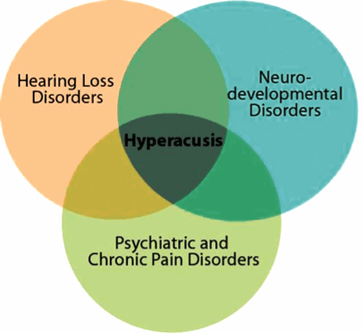 Paradoxically, the symptoms of hyperacusis, overlap with hearing loss and even pain disorders. (Source: ENT and audiology news)
It is worth mentioning, there are four broad categories of treatment stages assigned to patients with tinnitus and hyperacusis:
Category 1 — Patients with severe tinnitus, but do not have hyperacusis or subjective hearing loss.
Category 2—Patients have tinnitus and have significant hearing loss, but no hyperacusis.
Category 3 —Patients have hyperacusis, but no prolonged ear discomfort or severe tinnitus when exposed to noise. Ear discomfort and/or tinnitus is usually brief, and, if present, resets itself after a while. Hyperacusis is addressed first in this case. Amplification of the hearing aids may be considered after the hyperacusis problem is resolved.
Category 4—Patients have tinnitus and hyperacusis, along with excessive ear discomfort and/or exacerbation of tinnitus when exposed to noise. This category is treated very cautiously and monitored regularly.
Therefore, there is a huge overlap between symptoms of all these conditions.
Causes of Hyperacusis
The most common cause of hyperacusis is high noise levels .
Adverse drug reactions, ear infection, Meniere’s disease, Lyme disease, surgery, trauma like accidents or head injury may cause sudden hyperacusis. An antibiotic called ciprofloxacin is believed to cause a particular condition called ciprofloxacin related hyperacusis.
There are a few other diseases associated with hyperacusis. They are Bell's Palsy, Ramsay-Hunt Syndrome, Stapedectomy, Perilymphatic Fistula, Migraine, Depression, Post-Traumatic Stress Disorder, Head Injury, Fibromyalgia, William's syndrome, Addison's Disease, Autism, Myasthenia Gravis, Middle Cerebral Aneurysm, and Cerebrospinal Fluid (CSF) High Pressure.
Also, symptoms can be linked with anxiety and depression, making a person feel isolated.
Prevention
Hyperacusis Treatment
While there is a lot of debate about the cause of hyperacusis, there is treatment available.
Diagnosis of this condition is not always straightforward. This is because hyperacusis often occurs in combination with other conditions like loss of hearing or tinnitus.
Sound therapy is the most common treatment for hyperacusis, similar to the treatment of tinnitus but with changes to the protocol - TRT
Hyperacusis Protocol. Additional treatment options that are available include cognitive behavioral therapy ( CBT) which may also help tame the feelings of anxiety and depression. Taming the anxiety is crucial as the anxiety can make the symptoms much worse. Following an extended course of sound therapy and counseling, your sound tolerance thresholds have the potential to be reset back to normal levels.
Auditory experts decide on the treatment stages based on the severity of your condition. It may well be that your tinnitus or loss of hearing is treated first. Sound intolerance is thoroughly evaluated throughout the course of treatment.
Medical evaluation is carried out carefully because other conditions are associated with hyperacusis (see infograph above). This includes an examination of the nerves associated with the ears and temporomandibular joint dysfunction (TMJ) which is essentially checking the painful jaw muscles. Blood and serum are tested to rule out any additional deficiencies that need to be considered prior to treatment.
What to do next
At Tinnitus & Hearing Center of Arizona, Dr. Allen Rohe is a uniquely qualified audiologist that offers hyperacusis treatment . He's familiar with associated hearing conditions, including tinnitus, misophonia, and hearing loss.
It's recommended to schedule a consultation to discuss your options. Whether you're from out of state, out of country, or local to the Tempe, Arizona office, call the clinic at (480) 831-6159, or use the convenient online scheduler. Therapy sessions can be conducted remotely via internet Skype teleconference to those that qualify.
The information provided in this article is not meant to be medical advice and is for educational purposes only. If you would like to learn more about this and other hearing-related topics, feel free to contact Tinnitus & Hearing Center of Arizona by clicking here or by calling 480-831-6159.