Real-Ear Measurement (REM): The Gold Standard in Hearing Aid Verification
If you’ve ever thought about hearing aids and wondered, “How do I know they’re actually set up correctly for my ears?” you’re asking an excellent question.
Hearing aids today are incredibly advanced. They’re tiny computers designed to process sound in real time. But even the best technology can only work as well as it’s programmed for you. That’s why at The Tinnitus and Hearing Center of Arizona we use a clinical verification process called Real-Ear Measurement (REM) during fittings.
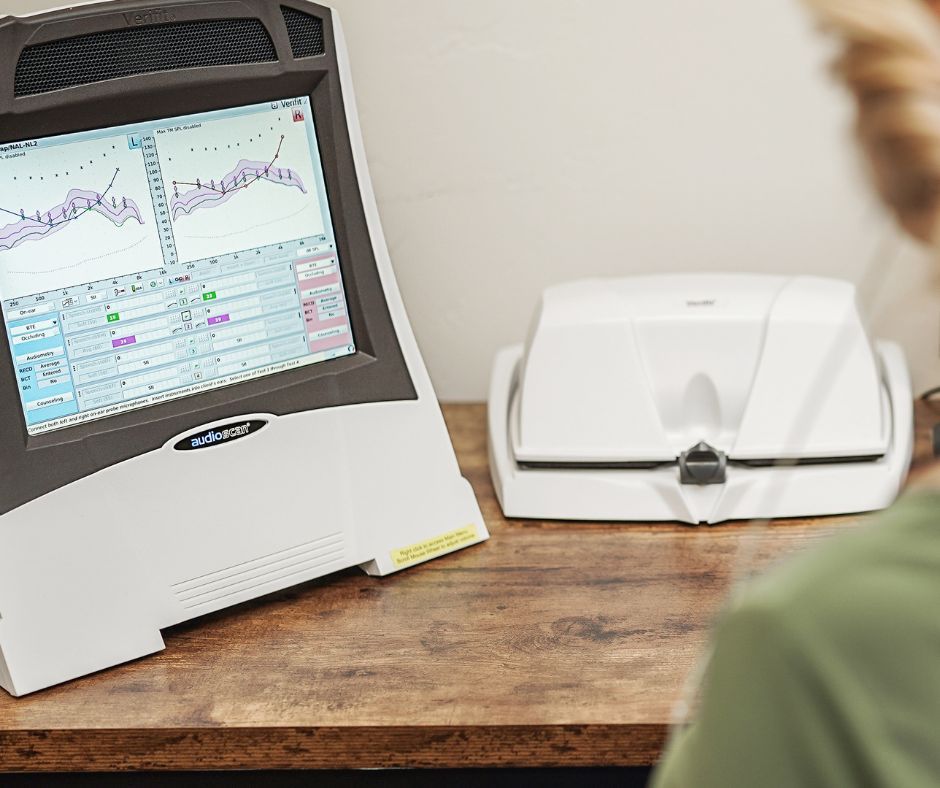
REM allows us to see exactly how sound behaves inside your ear canal while you’re wearing your hearing aids. Because everyone’s ears are shaped differently, sound can travel and amplify differently from person to person. This step helps us to ensure your hearing aids are truly working the way they should for your ears.
What Is Real-Ear Measurement?
Real-Ear Measurement is an in-office test that measures the sound your hearing aids are actually delivering inside your ear canal. Even people with similar hearing test results can experience hearing aids very differently. The size, shape, and acoustics of your ears all influence how sound is amplified. REM lets us confirm that your devices provide the right amount of sound across different pitches for your specific hearing loss and anatomy.
In simple terms, it verifies that what we program is truly reaching your ears as intended.
Why Default Hearing Aid Settings Aren’t Always Right
Most hearing aids come with the manufacturer's “first-fit” settings. These are helpful starting points, similar to the default settings on a new smartphone.
For some people, these settings feel fairly comfortable right away. For others, they may sound too soft, too sharp, or unclear. Without verification, fittings can sometimes miss the mark in ways that impact your comfort and even speech understanding.
REM allows us to move beyond trial and error. Instead of guessing, we can measure what’s happening inside your ear and make precise adjustments. It’s especially helpful if someone says, “I hear sound, but it doesn’t feel quite right.” We can actually see why and then correct it!
Some patients will schedule REM right away, and others want to wait and see how things feel first. Either way, our goal is always to provide you with the best clarity and comfort.
What a REM Appointment Looks Like
If you’ve never had REM done before, it’s quick and painless. Most of our patients are surprised by how simple it is!
During the appointment, we will:
• Review your hearing results and listening goals
• Place a tiny, comfortable microphone in your ear canal
• Play speech-like sounds to measure output
• Adjust your hearing aids to match prescriptive targets
• Fine-tune based on your comfort and clarity
That’s it! It’s really about collecting accurate data, so we don’t have to rely on guesswork. Why REM is Considered Best Practice in Audiology
REM does require specialized equipment, training, and extra appointment time. Some high volume or retail settings skip it because using the default programming is faster.
In medically focused audiology care, verification is considered a gold standard because it leads to better outcomes and more realistic expectations. At The Tinnitus and Hearing Center of Arizona we believe your hearing care deserves the same precision as any other healthcare service.
After REM, many of our patients tell us they experience:
• Clearer speech without needing more volume
• More natural sound quality
• Less listening fatigue
• Fewer misunderstandings
• Greater confidence in wearing their hearing aids
Ready to Make Sure Your Hearing Aids Are Fit Right?
At The Tinnitus and Hearing Center of Arizona our goal is to recommend the right technology for your needs and to verify that it’s working properly for your ears. Real-Ear Measurement helps us deliver hearing care that’s precise, personalized, and effective!
If you’re considering new hearing aids (or you’re wearing them now and wondering if they’re fully optimized), REM can make a significant difference. Call us at 480-831-6159 to schedule an appointment. We are proud to serve patients in Tempe, AZ and the surrounding communities.