Hearing Loss and Hearing Tests in Scottsdale AZ: Why Early Testing Matters

Hearing Loss and Hearing Tests in Scottsdale AZ
 It's not uncommon in today's noisy world to experience a gradual loss of hearing. However, left undetected or unaddressed, it can become problematic to one's everyday lifestyle.
If you are unable to hear as well as a person with normal hearing, which is about 50 decibels (dB), then you may be affected by hearing loss. It can affect one or both your ears.
To give you an understanding of the decibel levels, city traffic noises are usually 85 dB and sirens are 120 dB. Regular exposure to sound levels above 75 dB might cause hearing loss.
Recognizing Hearing Loss: Warning Signs
Newborns are usually tested after birth and the audiologists take appropriate steps. If a child is slow to learn talking or if their speech is not very clear, then their hearing should be checked.
If you, whether young or old, talk very loudly, find it hard to hear a conversation or even hear the alarm, doorbell or watch television very loudly, then you should see an audiologist.
Hearing loss has a stigma and it should not be. According to the World Health Organization, around 466 million people experience from severe loss of hearing, worldwide. Estimates suggest that the numbers will double in the next thirty years.
This means, you are not alone.
Common Causes of Hearing Loss
Besides hereditary cause, newborns may be affected with loss of hearing if they have a difficult birth or have jaundice. If the mother had complications during her pregnancy with illnesses like rubella or syphilis, or had certain strong medications, the newborn may have a loss of hearing.
Aging is one of the most common causes of progressive hearing loss. Hearing loss affects their daily life. They may find it difficult to have a conversation or even respond to the doorbell. There is a risk of older people falling into depression and memory loss because of their problems with hearing.
The other common cause of hearing loss is long term exposure to loud noise. Modern life tends to be noisy, including traffic noises, various modern gadgets and loud music. When surrounded by such loud noise, people may experience a gradual loss of hearing.
How Does Hearing Actually Work?
In the center of the hearing mechanism is the eardrum, present in the inner ear. The ear is a very sensitive and complex organ. It converts the sound wave to an electrical wave in the brain through a series of steps. The middle ear is a bony structure that vaguely looks like a snail. This structure called cochlea and the fluid inside it helps the sound wave to reach the eardrum which sits deep inside the inner ear. The vibration of the eardrum, in turn, triggers the tiny hairs on it converting it into an electric wave. This wave travels to the brain via the auditory nerve.
What Causes Hearing loss?
Loud noise, ear infection or putting objects in the ear like a cotton swab can injure the hair cells in the eardrum. A very loud burst of noise like an explosion may cause sudden loss of hearing. Fluid or earwax in the ear acts as a sound barrier and cause a temporary loss of hearing. Otosclerosis or growth of excess bone and Cholesteatoma, which is an abnormal collection of skin in the ear are two conditions where hearing is affected.
Illnesses like Meningitis, Meniere’s disease and certain conditions like high blood pressure, diabetes, stroke, heart conditions, and viral infection can cause loss of hearing. The chances are higher in older people.
Use of certain medicines used for treating severe infections, heart conditions and cancer may affect hearing. These medicines known as ototoxic drugs may damage the eardrum. Otosclerosis is thought to be a heredity condition that affects hearing.
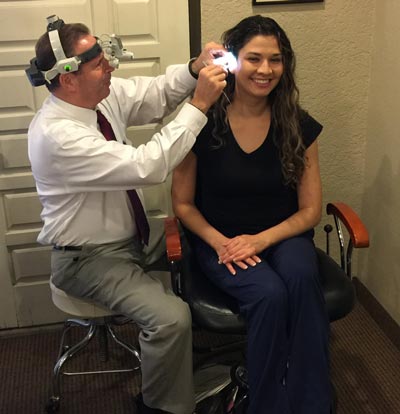
 If you feel that you or a loved one might be experiencing gradual hearing loss that is becoming noticeable or problematic, we recommend contacting us at Tinnitus & Hearing Center of Arizona to schedule a simple, quick, and non-invasive hearing test is a great idea. Our friendly audiologists will welcome you into our clinic, discuss your situation, and conduct a painless (and even fun) hearing exam.
Just as you might have an annual eye exam to measure your vision, you should have a hearing test to measure your other important sense - your hearing.
We provide hearing tests for Scottsdale AZ and Phoenix residents, and any patient in the Valley. Call us directly at (480) 831-6159 or use our convenient online scheduler to book an appointment on your computer or phone.
The information provided in this article is not meant to be medical advice and is for educational purposes only. If you would like to learn more about this and other hearing-related topics, feel free to contact Tinnitus & Hearing Center of Arizona by clicking here or by calling 480-831-6159.