What Type of Tinnitus Responds Best to NeuroTechnology?

- Subjective tinnitus responds remarkably well to modern cognitive hearing technologies.
- Patients who experience ringing in the ears alongside hearing loss often see the greatest relief from advanced neural stimulation.
- Determining the origin of your phantom sounds is required before selecting from various tinnitus treatment options.
Subjective tinnitus and ringing caused by hearing loss respond best to cognitive auditory therapies. Finding an effective solution for the persistent noise in your ears begins with understanding exactly what is happening in your brain. Tinnitus & Hearing Center of Arizona specializes in advanced solutions for auditory conditions, and our team knows that retraining your neural pathways is the key to lasting relief. Subjective tinnitus means you are the only one who can perceive the phantom sounds, a condition frequently linked to sensory deprivation. By treating the brain rather than just addressing the ear, we help patients overcome these daily auditory disruptions.
What NeuroTechnology Is
To effectively treat auditory challenges, we must recognize that we hear with our brains, not just our ears. NeuroTechnology is designed to address hearing loss and ringing by using complex stimulation patterns to replace diminished auditory input. Traditional hearing aids simply make things louder. Our modern treatments help you hear more clearly and naturally by filling in missing speech details and canceling background noise. You can learn more about how we restore hearing clarity and cognitive function on our at
Tinnitus Types That Respond Best
Subjective tinnitus is by far the most common type and the one that responds best to cognitive hearing therapies. When you lose hearing ability, your brain is deprived of normal sensory input. This leads to maladaptive neuroplasticity, where the brain reorganizes itself improperly and creates phantom noises. Advanced therapies and devices work brilliantly for this specific issue because they focus on optimizing and improving the sensory processing capabilities of your brain, effectively teaching it to ignore the constant ringing.
When NeuroTechnology May Not Be Ideal
While neural therapies are highly effective for most patients, they are not universally applicable. Objective tinnitus is a rare form where a doctor can actually hear the sound during an examination. This type is usually caused by underlying physical issues like abnormal blood flow, muscle spasms, or structural irregularities in the ear or neck. In these cases, cognitive retraining will not resolve the physical root cause, and patients typically require medical or surgical intervention from a specialist.
Why Evaluation Is Critical
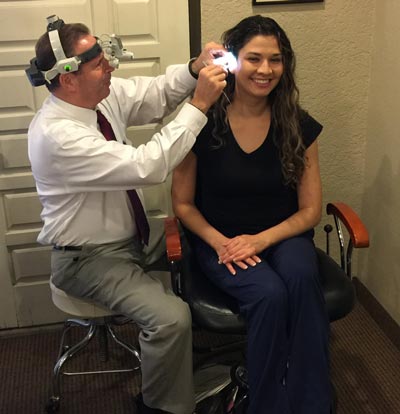
Because the causes and manifestations of auditory conditions vary so widely, a comprehensive evaluation is a mandatory first step. There is no single cure that works for everyone. Through specialized testing, we pinpoint exactly how your brain is processing sound and determine if you are a candidate for a neuromodulation device or other advanced therapies. We carefully review your specific needs to ensure you receive a highly customized treatment plan rather than a generic approach.
How Lenire Uses Bimodal Neuromodulation
We are proud to be among the first fifteen clinics in the United States selected to offer a revolutionary new treatment. The Lenire tinnitus treatment is an FDA-approved system that provides relief through dual sensory stimulation. For those exploring bimodal neuromodulation tinnitus therapies, the system utilizes Bluetooth headphones to deliver customized sound therapy while a specially designed Tonguetip delivers mild, safe energy pulses to the surface of the tongue. These sounds and pulses work together to retrain your neural networks. The results speak for themselves, as eighty-three percent of patients in a large-scale clinical trial recommended the treatment.
Taking the Next Step for Tinnitus Relief
You do not have to let persistent ringing control your daily life, your focus, or your sleep. Our dedicated team is ready to guide you through the latest tinnitus treatment options and help you regain peace of mind. Schedule your assessment today by filling out the form on our website.
Image credit: // Shutterstock // Andrii Nekrasov